
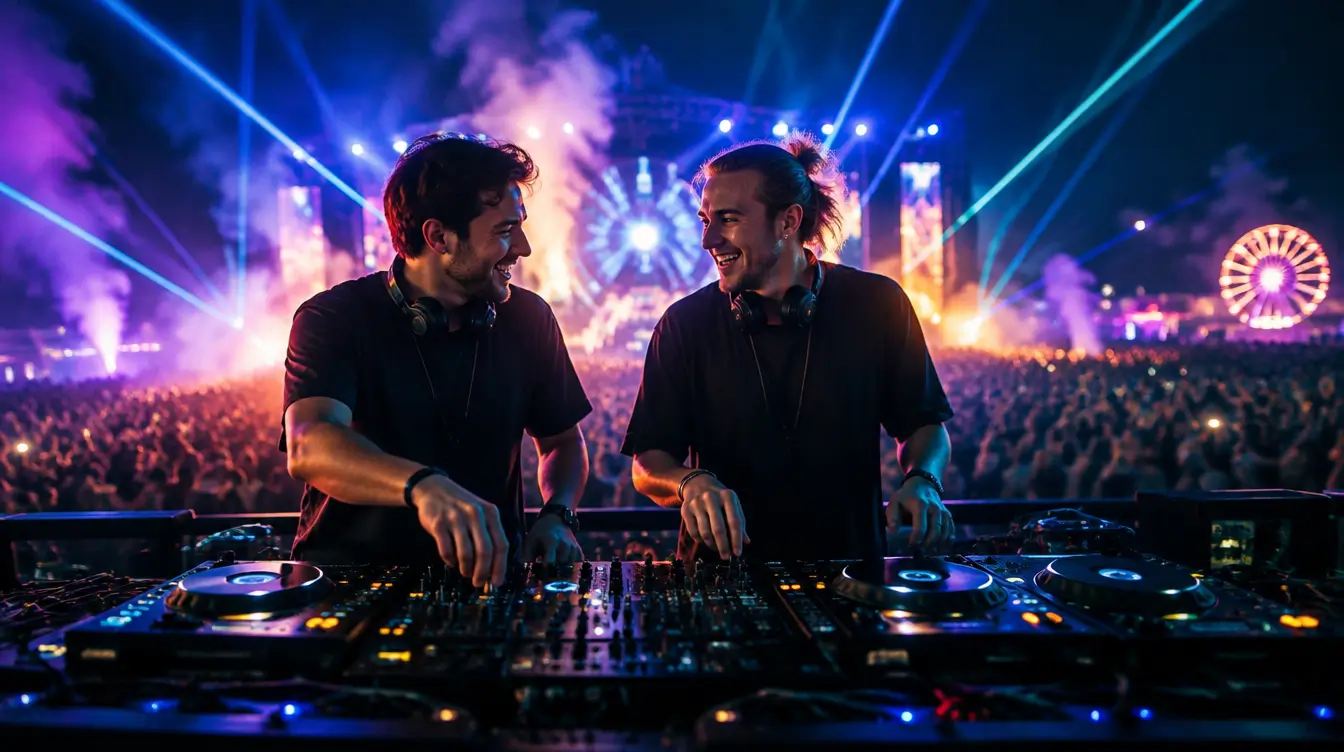
Picture a DJ booth. One person, two decks, a crowd of thousands. It looks like the loneliest job in music, yet some of the biggest names in electronic music never really work alone. They’re best friends who happen to share a stage, and those friendships shape the sound as much as any synth or sampler.
The kids from Stockholm
Swedish House Mafia might be the ultimate proof that friendship scales. Steve Angello and Sebastian Ingrosso came up together in Stockholm long before stadium crowds, and Axwell completed the trio. When they announced their farewell tour in 2012, fans mourned like a band was splitting up, because in a way it was.
Their reunion at Ultra Miami in 2018 felt less like a comeback than three old friends deciding the room needed them again. Their later album, Paradise Again, leaned into that sense of homecoming. You can hear people who know exactly how the others think.
Two lads from Belfast
Bicep’s origin story is about as friendship-first as it gets. Matt McBriar and Andy Ferguson grew up together in Belfast and started out sharing obscure finds on a music blog, Feel My Bicep, before touring the world. Their taste, a mix of rave nostalgia, warm melody and crate-digger obsession, feels like two people constantly swapping records and saying “you have to hear this.”
The Manchester duo who defined big beat
The Chemical Brothers, Tom Rowlands and Ed Simons, met at university in Manchester and bonded over a shared love of hip-hop, techno and anything that made a dancefloor lose its mind. They’ve been making music together for over three decades, which in dance music is practically geological time. Their longevity says something simple: if you genuinely like your collaborator, you never run out of things to make together.
The new-school trio
Few modern friendships are as fun to watch as Skrillex, Fred again.. and Four Tet. They’ve turned up in each other’s sets, produced together, and thrown surprise back-to-back sessions that fans trade like folklore. They come from different corners of the electronic world (bass music, emotional sampling, UK club experimentalism), and that’s what makes it work. Each brings out something the others wouldn’t find alone.
The Berlin family
Keinemusik, the collective built around &ME, Rampa, Adam Port and Reznik, goes further and calls itself a family. They play together, release together and share a distinctive, sun-soaked house sound. The crowd doesn’t just come for a headliner. It comes for a whole crew, and you can feel the trust when they trade sets.
Why DJ friendships work so well
- Trust in the booth. Back-to-back sets only work if you can read each other. One person drops a track and the other already knows the next move. That’s chemistry you can’t fake.
- Shared road life. Tours mean airports, hotel rooms and 4 a.m. after-parties. Friends survive that better than business partners do.
- Honest ears. A close friend will tell you when a track isn’t ready, which is rare in an industry full of yes-people.
- Less ego, more music. When you’re celebrating your friend’s big moment, competition softens into inspiration.
The takeaway
Behind every legendary set is often a friendship older than the fame. The lights, the drops and the festival screens are the spectacle, but the real magic is two or three people who love each other’s taste. The next time a DJ hands the decks to a friend mid-set and the room erupts, remember that this is what the whole thing was built on.